Leave Your Message

2026 Top Green Onion Pie Suppliers for Global Buyers

Global buyers are paying closer attention to Green Onion Pie suppliers in 2026. Taste still matters, but dependable supply matters just as much. Buyers now examine ingredient transparency, production capacity, packaging strength, and export experience before placing large orders.

Chef Li Wei, a pastry consultant specializing in northern Chinese cuisine, says, “A memorable Green Onion Pie begins with fresh scallions, but consistency keeps buyers returning.” His comment reflects a practical industry truth. A supplier may produce an excellent sample yet struggle with large-volume orders. That gap deserves attention.

This guide reviews leading Green Onion Pie suppliers for international purchasing teams. It considers factory experience, product texture, filling ratios, freezing methods, and private-label support. Cold-chain performance also remains essential. A pie can leave the factory perfectly layered and arrive soft, cracked, or dry.

Reliable suppliers should provide clear specifications, allergen information, production photographs, and realistic delivery schedules. Buyers should request samples before approving contracts. They should also verify certifications independently. Paperwork can look impressive. It does not always guarantee daily consistency.

The featured companies serve restaurants, wholesalers, retailers, and food-service distributors. Some focus on handmade textures. Others depend on efficient automated production. Both models can work, although their costs and minimum order quantities differ.

No supplier ranking is permanent. Prices change, factories expand, and quality can drift. That is an uncomfortable limitation. Buyers should treat this overview as a starting point, not a final decision. Careful communication, sample testing, and small trial orders remain valuable safeguards when choosing a global Green Onion Pie partner.
2026 Top Green Onion Pie Suppliers for Global Buyers

Green Onion Pie: Product Overview and Key Market Characteristics

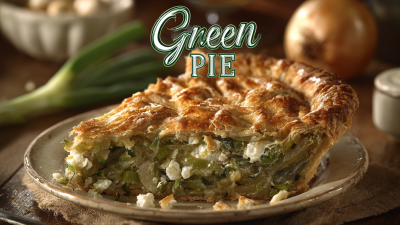
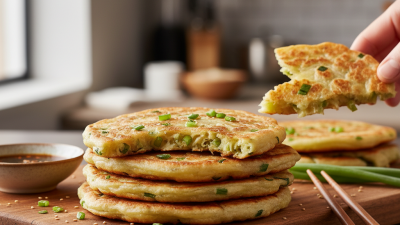
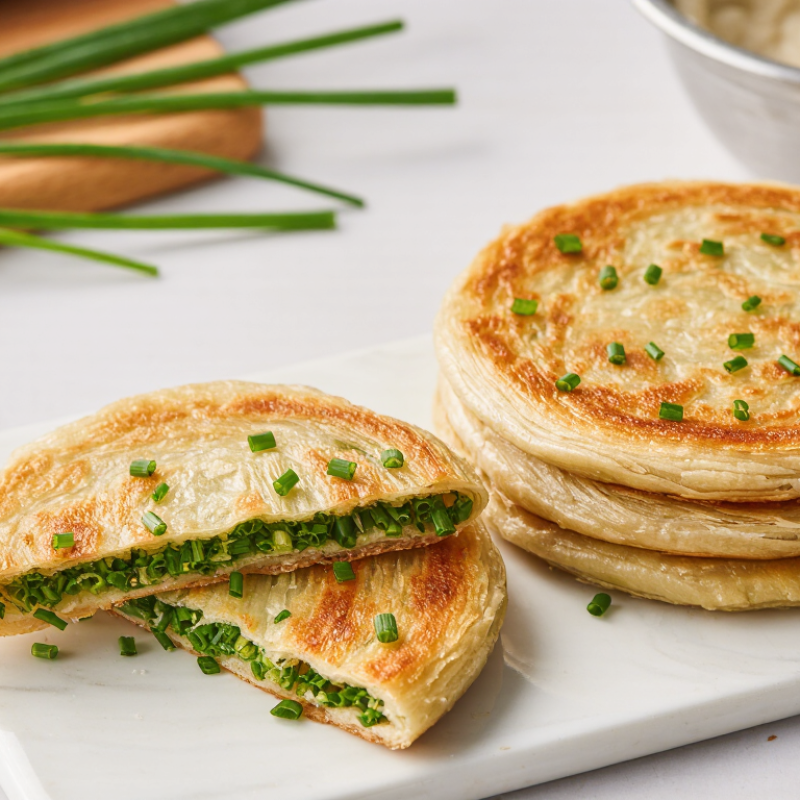
Green onion pie is a layered wheat pastry filled with chopped green onions, oil, and seasoning. Its crisp surface and soft, aromatic center make it suitable for retail, foodservice, and quick-service kitchens. Products may be supplied frozen, par-baked, or ready to cook. Frozen formats usually provide better consistency during international distribution. However, texture can change after thawing. Buyers should test cooking results before placing large orders.

Key market characteristics include portion size, filling distribution, dough thickness, and cooking performance. Common formats range from individual snacks to larger foodservice packs. Reliable suppliers should provide ingredient specifications, allergen information, shelf-life data, and clear storage instructions. Packaging must protect the pastry from moisture and crushing. Cold-chain control is equally important, especially during port delays or seasonal temperature changes. In my experience, buyers often focus on price first. That can be a costly mistake. A lower unit cost may hide weaker packaging, higher breakage, or inconsistent filling. Product samples, factory audits, and batch records offer stronger evidence of reliability.
Tips: Check the pastry after frying, baking, or air frying. Compare aroma, flakiness, oil absorption, and filling balance. Ask for several production batches, not one perfect sample. Confirm carton dimensions, minimum order quantities, lead times, and temperature requirements. Do not assume “traditional taste” means the same thing across markets. Local consumer testing still matters.

How to Evaluate Green Onion Pie Suppliers in 2026

Global buyers should evaluate green onion pie suppliers through evidence, not attractive catalogs. Product samples must show crisp edges, visible scallion pieces, balanced oil, and stable texture after reheating. Request ingredient specifications, allergen declarations, microbiological results, and lot-level traceability. Codex General Principles of Food Hygiene recommends hazard-based controls, including documented sanitation and process monitoring.

Cold-chain performance deserves close attention. The FAO State of Food and Agriculture 2019 estimated that 14% of food is lost between harvest and retail. The UNEP Food Waste Index Report 2024 reported that 19% of food available to consumers was wasted in 2022. These figures make packaging, temperature control, and forecast accuracy practical supplier tests. Ask for loading temperatures, storage records, carton compression data, and shelf-life validation. A supplier may pass an audit yet still struggle during port delays. That risk needs evidence.

Tips: Compare three production batches, not one. Test frozen pies after thawing and reheating. Check whether scallion supply changes by season. Review corrective-action reports, not only certificates. Confirm monthly capacity against your peak-order forecast. I would also inspect oil oxidation controls, because flavor can decline before safety limits are reached. No supplier scores perfectly. A transparent weakness is often safer than an impressive, incomplete answer.

2026 Top Green Onion Pie Suppliers for Global Buyers

How to Evaluate Green Onion Pie Suppliers in 2026

This buyer evaluation model uses practical procurement criteria for frozen and ready-to-cook green onion pies. Food safety and export compliance receive the highest weights, followed by cold-chain performance, production capacity, delivery reliability, and sustainability. The percentages are recommended assessment weights rather than company-specific performance claims.

Top Supplier Regions and Manufacturing Capabilities

For 2026 global buyers, supplier regions matter as much as recipe quality. East Asia remains a major sourcing base for scallions, flour processing, and high-volume frozen foods. Southeast Asia offers competitive labor costs and growing cold-chain capacity. Eastern Europe and North America provide shorter delivery routes for regional buyers, but production costs can be higher.

FAOSTAT’s recent crop database places global onion-family production above 100 million metric tons annually. However, it does not separately measure scallions used in filled pastries. This reporting gap requires careful supplier verification. The International Trade Centre also groups many baked products under broad customs categories, so trade values cannot directly confirm green onion pie volumes.

Look for factories with dough sheeting lines, controlled filling ratios, spiral freezing, and metal detection. A reliable plant should record scallion origin, washing temperature, allergen controls, and cold-room readings. Many facilities claim export readiness.

Check the details.

Request recent audit reports, batch samples, and loading photographs. Frozen pies should remain at stable temperatures during storage and transport. GFSI-recognized food-safety systems can strengthen confidence, but certificates do not replace factory visits or independent testing. I would also compare breakage rates after cooking, because attractive packaging often hides weak pastry structure. Supplier selection remains imperfect when regional data and product classifications are incomplete.

Quality Standards, Certifications, and Export Readiness

Global buyers assessing green onion pie suppliers in 2026 should examine quality systems beyond product appearance. Reliable facilities use documented HACCP plans, validated cooking controls, allergen separation, and metal detection. Codex Alimentarius’ General Principles of Food Hygiene, updated in 2022, places preventive controls and traceability at the center of food safety management.

Small details matter.

A supplier should provide batch-specific certificates of analysis, ingredient specifications, microbiological results, and production records. Frozen products also require stable cold-chain handling, commonly maintained at -18°C or below. The World Health Organization estimates that contaminated food causes 600 million illnesses and 420,000 deaths annually worldwide. This figure shows why export buyers should treat sanitation evidence as commercial protection, not paperwork.

Certifications such as ISO 22000, FSSC 22000, BRCGS, or an equivalent audited system can support supplier evaluation. However, a certificate alone is not proof. Buyers should verify its scope, expiry date, audit status, and covered production site. Export-ready suppliers should also manage destination-country labeling, allergen declarations, shelf-life validation, packaging strength, and temperature records. English labeling may not satisfy every market.

The weak point is often operational.

Some suppliers present polished certificates but provide slow recall responses or incomplete lot tracking. A practical buyer test is simple: request a mock traceability exercise from finished carton to raw green onion lot. Response quality reveals experience. Supplier approval should remain conditional until documents, samples, factory audits, and shipment performance agree.

Pricing, Minimum Orders, and Global Purchasing Considerations

Global buyers should compare green onion pie suppliers by landed cost, not factory price alone. FAOSTAT’s 2023 data places global onion and shallot production above 100 million tonnes, yet green onion pies remain a small, specialized segment. Public trade statistics rarely separate this product clearly. Therefore, request product-specific invoices, ingredient ratios, and recent shipment records.

For a standard 10-kilogram frozen carton, an initial FOB screening range of USD 18–35 may be reasonable. Treat it cautiously. Flour quality, oil content, filling weight, and packaging can change the quote quickly. Smaller trial orders may require 300–800 cartons, while regular production often starts near 1,000 cartons. Confirm whether the minimum order applies per flavor, carton size, or container.

Freight can exceed the factory-price difference. The World Bank’s Commodity Markets Outlook shows continued sensitivity in food costs to energy, weather, and transport conditions. Ask for prices under FOB, CIF, and DDP terms. Paperwork matters. Check cold-chain temperature records, shelf-life testing, allergen declarations, and manufacturing certifications before payment. A 24-month shelf life sounds attractive, but poor freezer handling can damage texture within weeks. Small pilots help. I would not trust the cheapest offer without verifying carton compression, seal quality, and cooking performance after long-distance transit.

2026 Top Green Onion Pie Suppliers for Global Buyers - Pricing, Minimum Orders, and Global Purchasing Considerations

Supplier Profile Typical Production Region Product Format Diameter / Weight Packaging Configuration Indicative FOB Price* Typical MOQ Estimated Lead Time Export & Compliance Options Key Purchasing Consideration
Profile A Eastern China Frozen layered green onion pie 10–12 in / 90–120 g per piece 20 pieces × 10 bags per carton US$18–28 per carton 500 cartons 25–40 days after artwork approval HACCP, ISO 22000, BRCGS or equivalent may be available; confirm certificate scope Suitable for retail and foodservice; confirm oil type, allergen controls, and private-label artwork requirements.
Profile B Northern China Par-fried frozen scallion pancake 8–10 in / 70–100 g per piece 30 pieces × 8 bags per carton US$16–25 per carton 300 cartons 20–35 days for standard specifications Food-export registration and HACCP documentation commonly available; verify destination-country approval Competitive for high-volume buyers; request cooking tests because flakiness and oil absorption vary by formula.
Profile C Taiwan Premium handmade-style frozen green onion pie 7–9 in / 80–110 g per piece 10 pieces × 12 retail bags per carton US$24–38 per carton 200 cartons 30–45 days, depending on packaging HACCP, ISO 22000, vegetarian and allergen declarations subject to documentation review Higher unit cost may be justified by premium texture; confirm whether the recipe contains lard, dairy, or animal-derived ingredients.
Profile D Southeastern China Vegan frozen scallion pancake 6–8 in / 60–90 g per piece 25 pieces × 10 bags per carton US$17–27 per carton 400 cartons 25–40 days after formula confirmation Vegan declaration, HACCP, ISO 22000, and export health documents may be requested Confirm segregation from egg, milk, seafood, and meat products if the destination market requires vegan certification.
Profile E Central China Foodservice bulk frozen green onion pie 10–12 in / 100–140 g per piece 40 pieces in a bulk carton US$20–31 per carton 600 cartons 30–45 days for recurring orders HACCP and product testing documentation commonly offered; request batch traceability records Designed for restaurants and distributors; compare carton net weight, piece count, and cooking yield rather than carton price alone.
Profile F South Korea Frozen green onion pancake with vegetable filling 6–8 in / 80–100 g per piece 10 pieces × 10 bags per carton US$28–42 per carton 150 cartons 35–50 days, subject to production scheduling HACCP, ISO 22000, allergen labeling, and destination-market import documents should be confirmed May fit premium Asian-food channels; check filling ratio, sodium level, and translated label compliance.
Profile G Vietnam Frozen flat green onion pastry 7–9 in / 70–100 g per piece 20 pieces × 10 bags per carton US$19–30 per carton 300 cartons 30–45 days after sample approval HACCP, ISO 22000, product testing, and export documentation may be available Review raw-material origin, freezer capacity, and shipping frequency before selecting a regular container program.
Purchasing notes: Prices are indicative 2026 FOB ranges in USD and vary with flour, oil, green onion, packaging, order volume, seasonality, exchange rates, and destination-market requirements. Confirm the final quotation, Incoterm, carton net weight, pallet configuration, frozen storage temperature, shelf life, product specifications, allergen statement, certificates, and import eligibility before placing an order. Frozen products are generally shipped and stored at or below −18°C; maintain an uninterrupted cold chain.