Leave Your Message
- Phone
- E-mail
- Whatsapp
- Wechat

-

-

-

-

Green Onion Pie has moved from regional street-food counters into frozen aisles, restaurant menus, and international foodservice catalogs. Its appeal is practical: layered dough, fragrant scallions, crisp edges, and quick preparation. Yet quality varies sharply between suppliers. Some pies arrive flaky and aromatic. Others become greasy, dense, or disappointingly pale after reheating.
Broader industry data explains this growing opportunity. The FAO’s FAOSTAT database records onions as one of the world’s major vegetable crops, supporting a deep and relatively stable ingredient supply. Grand View Research also projects continued expansion in the global frozen food market through 2030, driven by convenience, longer shelf life, and improved cold-chain distribution. These trends matter to importers, wholesalers, restaurant groups, and private-label buyers seeking scalable Green Onion Pie products.
Chinese-food authority Fuchsia Dunlop describes scallion pancakes as “a classic northern Chinese snack.” That simple description reflects their strongest commercial advantage: recognizable flavor with flexible serving formats. Buyers still need evidence, not attractive catalog photos. Dough thickness, scallion distribution, oil control, freezing method, packaging integrity, and reheating performance deserve careful review.
This guide evaluates 10 Green Onion Pie suppliers for global buyers. It considers product consistency, export experience, certifications, minimum order quantities, customization, and delivery support. A ranking is never absolute. Local tastes, freight costs, and kitchen equipment can change the result. That is the uncomfortable part. The best supplier on paper may not be the best partner for every market.
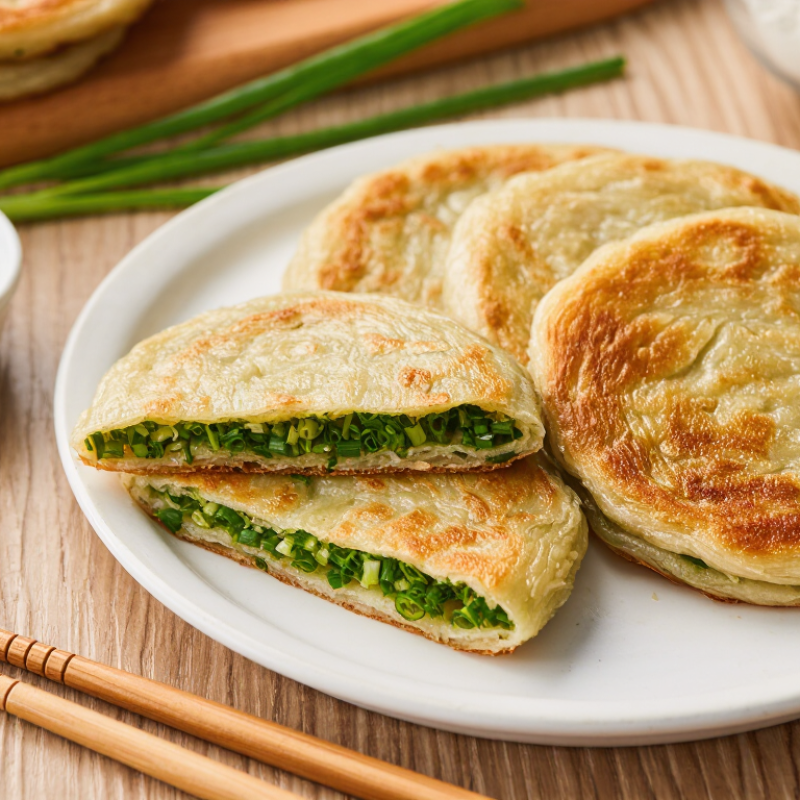
A reliable green onion pie supplier proves consistency beyond attractive product photos. Buyers should request production samples from different batches, then inspect dough layers, onion aroma, oil balance, and cooking performance. A good pie should crisp evenly without leaking excessive oil. Small details matter.
Reliable suppliers explain their raw material controls clearly. They should identify onion origins, flour specifications, allergen procedures, and batch traceability. Current food safety certifications are useful, but certificates alone do not guarantee good practice. Ask how often facilities are audited and how nonconforming products are handled. Temperature records should cover processing, storage, loading, and transportation. One missing log can create doubt.
Export experience also shows in practical communication. The supplier should provide accurate specifications, carton dimensions, shelf life, storage instructions, and complete shipping documents. Response speed matters, but honest answers matter more. A dependable partner will state capacity limits instead of promising every volume. Trial orders can reveal packaging weakness, delivery delays, or uneven sizing. That is not failure; it is evidence for improvement. Buyers should record cooking results and request corrective action. Even experienced suppliers may overlook moisture buildup during long transport. The strongest relationship grows through documented checks, realistic forecasts, and direct communication.
The table below presents anonymized supplier profiles using practical international sourcing benchmarks. Certifications, capacity, product specifications, and delivery terms should be verified directly with each supplier before purchase.
| Supplier Profile | Product Format | Typical MOQ | Frozen Shelf Life | Cold-Chain Requirement | Quality Evidence to Request | Export Readiness | Reliability Advantage |
|---|---|---|---|---|---|---|---|
| Supplier Profile 01 | Hand-folded, frozen green onion pie | 500–1,000 kg | 12 months at −18°C or below | Continuous frozen storage | Ingredient specification, allergen statement, batch records | Experienced | Strong control of layering and consistent portion size |
| Supplier Profile 02 | Par-fried, frozen scallion pancake | 1,000–2,000 kg | 12 months at −18°C or below | Frozen transport and storage | Cooking instructions, oil specification, microbiological test report | Experienced | Faster food-service preparation and uniform browning |
| Supplier Profile 03 | Vegetarian, no-meat frozen pie | 300–800 kg | 9–12 months at −18°C or below | Frozen storage required | Vegetarian declaration, allergen controls, sanitation records | Developing | Suitable for vegetarian retail and food-service menus |
| Supplier Profile 04 | Private-label frozen green onion pie | 2,000–5,000 kg | 12 months at −18°C or below | Frozen distribution network | Approved artwork, label compliance review, traceability test | Advanced | Supports customized packaging and larger recurring orders |
| Supplier Profile 05 | Mini-size frozen pie for catering | 500–1,500 kg | 9–12 months at −18°C or below | Frozen transport required | Weight tolerance report, pack-count verification, HACCP plan | Experienced | Convenient portion control for buffets and catering operations |
| Supplier Profile 06 | Large-format food-service pie | 1,000–3,000 kg | 12 months at −18°C or below | Frozen storage and handling | Dimension sheet, case-pack details, pallet configuration | Experienced | Optimized for restaurants requiring high-volume service |
| Supplier Profile 07 | Clean-label frozen green onion pie | 500–1,000 kg | 9–12 months at −18°C or below | Frozen chain required | Full ingredient list, additive declaration, allergen risk assessment | Developing | Meets demand for simpler ingredient statements and transparency |
| Supplier Profile 08 | Retail-ready individually packed pie | 1,000–2,500 kg | 12 months at −18°C or below | Frozen retail distribution | Barcode data, case-label sample, packaging migration statement | Advanced | Reduces store-level handling and simplifies inventory control |
| Supplier Profile 09 | Air-fryer and oven-compatible frozen pie | 500–1,500 kg | 9–12 months at −18°C or below | Frozen transport and storage | Validated cooking instructions, texture test, finished-product specification | Experienced | Offers convenient preparation across common commercial appliances |
| Supplier Profile 10 | Custom-formulated frozen green onion pie | 1,500–4,000 kg | 12 months at −18°C or below | Validated frozen logistics | Pilot-batch approval, process flow chart, certificate of analysis | Advanced | Provides flexibility for local taste, size, and packaging requirements |